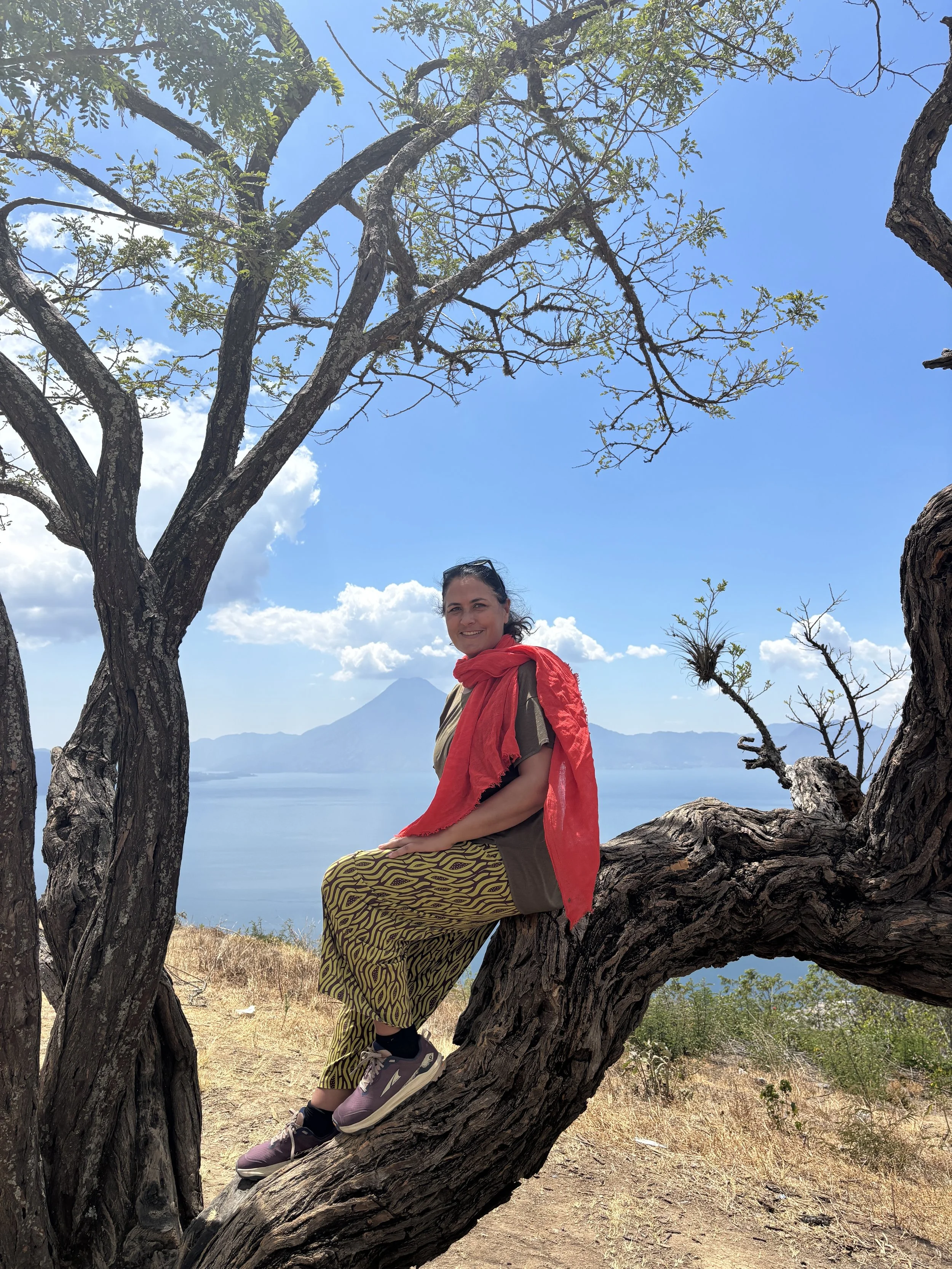
Pilgrimage creates conditions that can’t be replicated elsewhere
I work in partnership with experienced practitioners and leaders to shape pilgrimage-based retreats where their work is lived, not delivered.
Through rhythm, landscape and shared journey something begins to shift. The pace slows, the mind quietens, the body comes to the fore and a different kind of awareness becomes possible.
The work you bring meets the experience of the journey itself. What begins in a workshop or conversation can continue to unfold through walking, shared experience and time in the landscape.
The work you bring meets the experience of the journey itself.
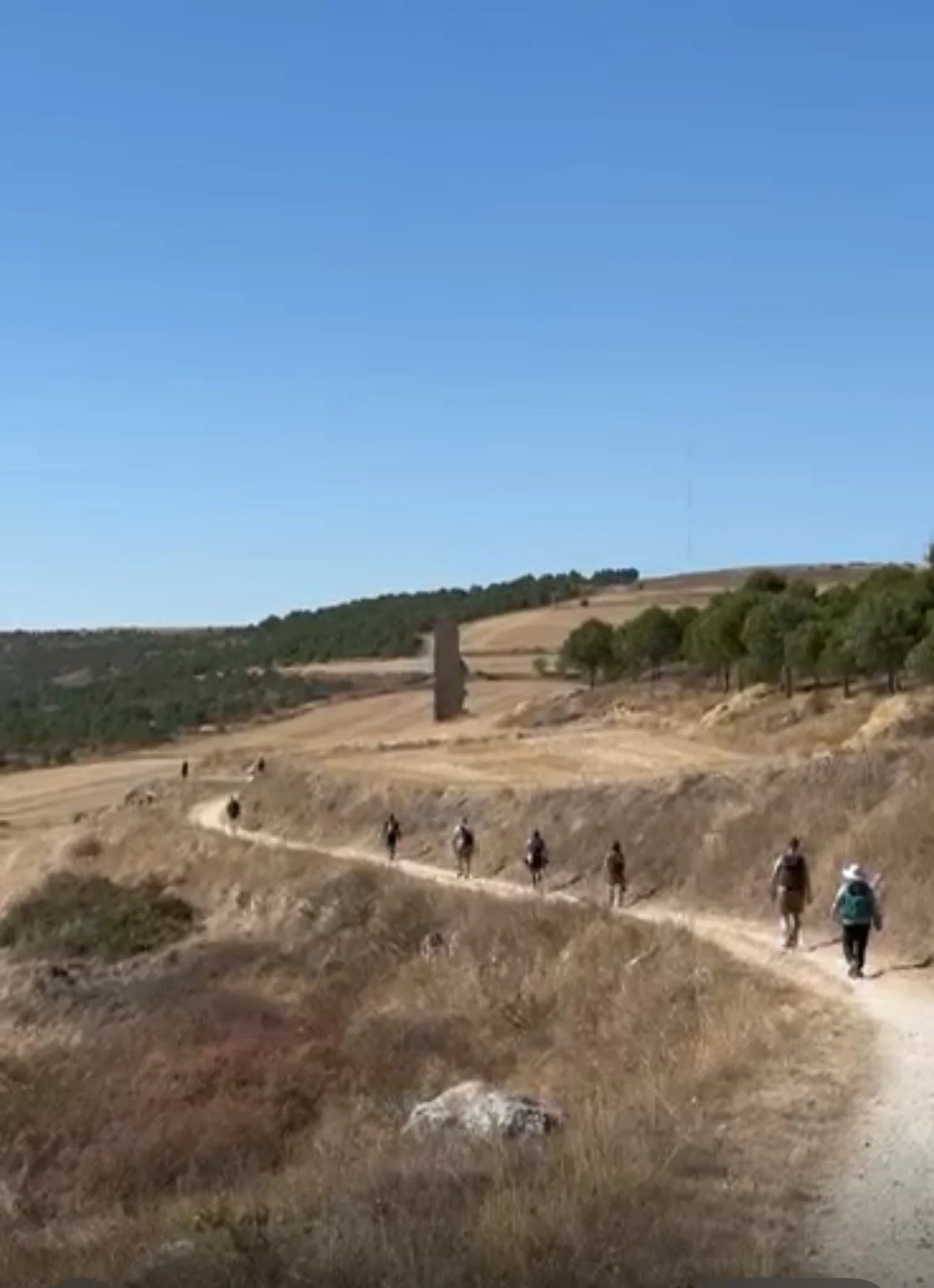
As we walk day after day, the familiar structures of everyday life give way to a simpler rhythm. Misty mornings open onto distant horizons; the path climbs, our breathing changes, and the landscape unfolds one step at a time. The effort of walking, the conversations along the way, the challenges that arise and the experience of travelling together all become part of the work.
We may arrive with questions about what needs to change or what we are ready to let go of, but we don't have to find the answers through thinking alone. There is space to notice what emerges, meet it with curiosity, and allow new understanding to take shape as the journey unfolds.
Bringing your work to the Camino
You bring your programme and your community. I design and organise the pilgrimage retreat around your work, taking care of the route, accommodation, workshop spaces, meals, luggage transfers and participant logistics. We shape the experience together, so you can focus on your work and your participants.
“I had the absolute pleasure of attending the IFS Camino retreat in 2025 organised by Sarah Samuel. The experience was brilliant with morning workshops led by Richard Schwartz and Jeanne Catanzaro followed by afternoon walks on the Camino De Santiago. I was particularly impressed by the organisational efficiency and attention to detail. Sarah was meticulous in planning the event. As participants, we were able to reach out to her thanks to open lines of communication and her warm presence was very reassuring. Thank you Sarah. “
Dr Abrar Hussain FRCPsych, Consultant Psychiatrist
What this looks like in practice
What unfolds in these journeys unfolds through the gradual loosening of how we hold ourselves. My role is to create and hold the conditions that allow this to happen.
This includes the practical structure of the journey such as routes, logistics and lodging, as well as the more subtle work of holding a space where participants can begin to meet themselves differently, both individually and together.
On the Camino
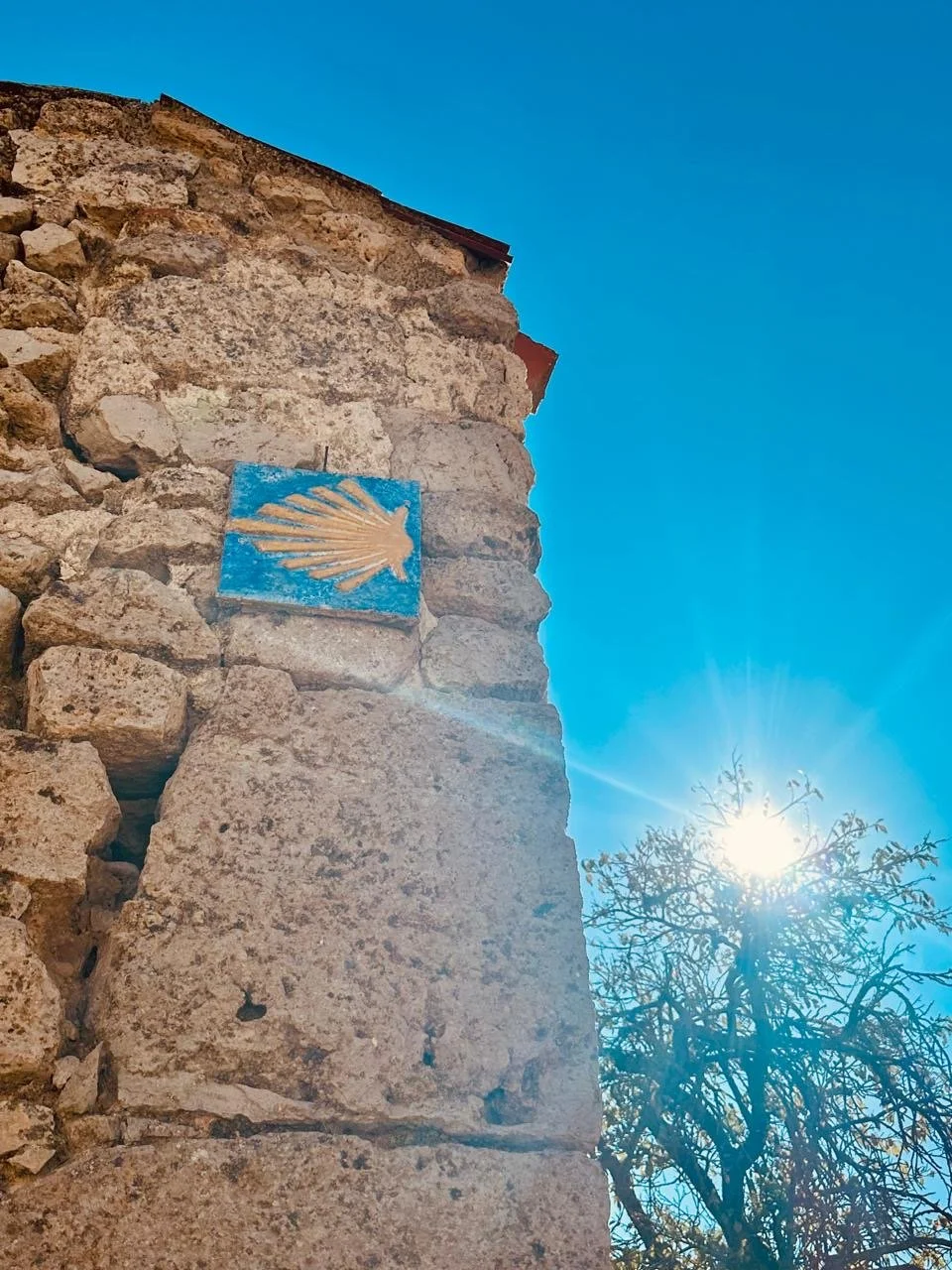
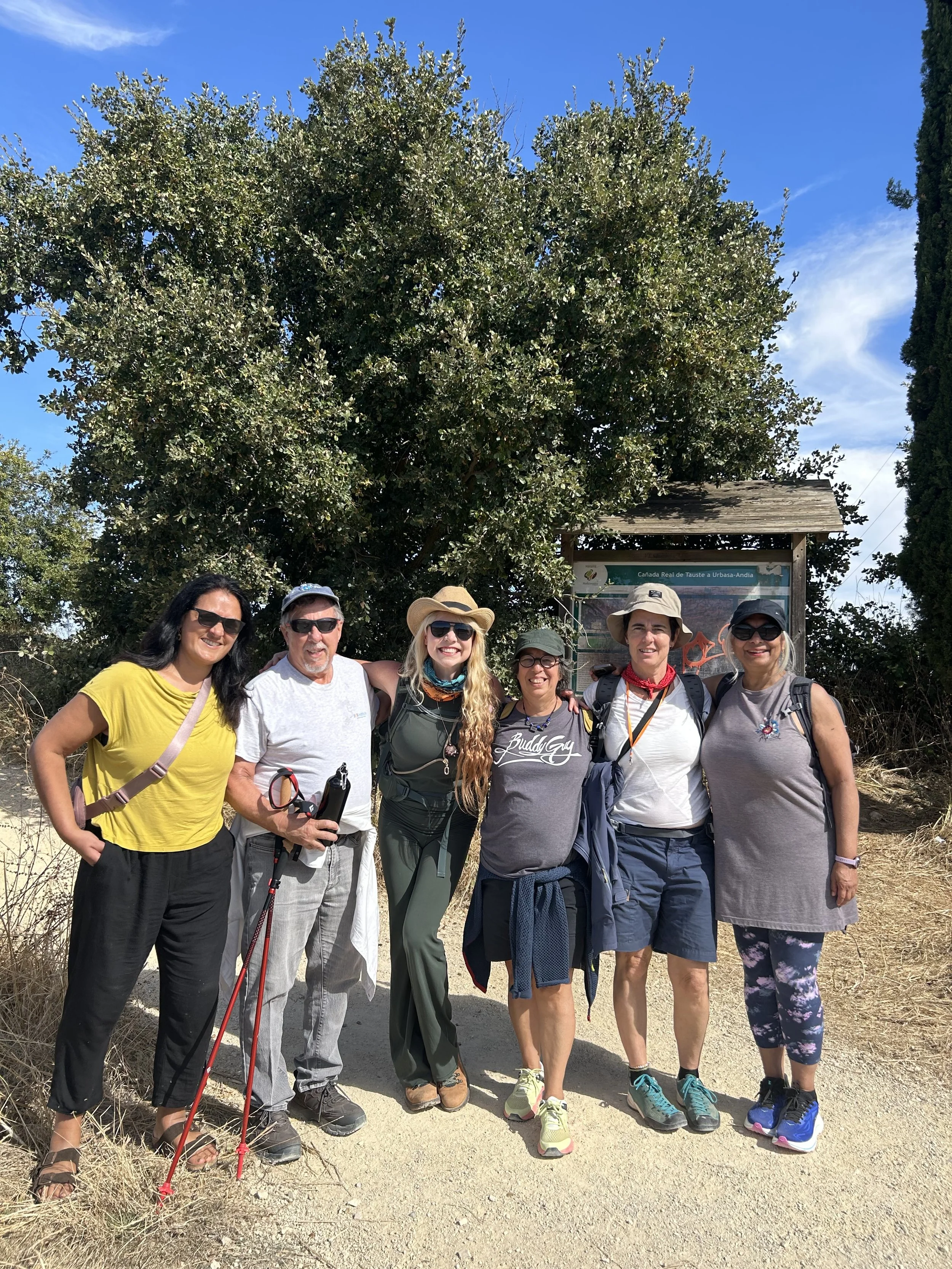
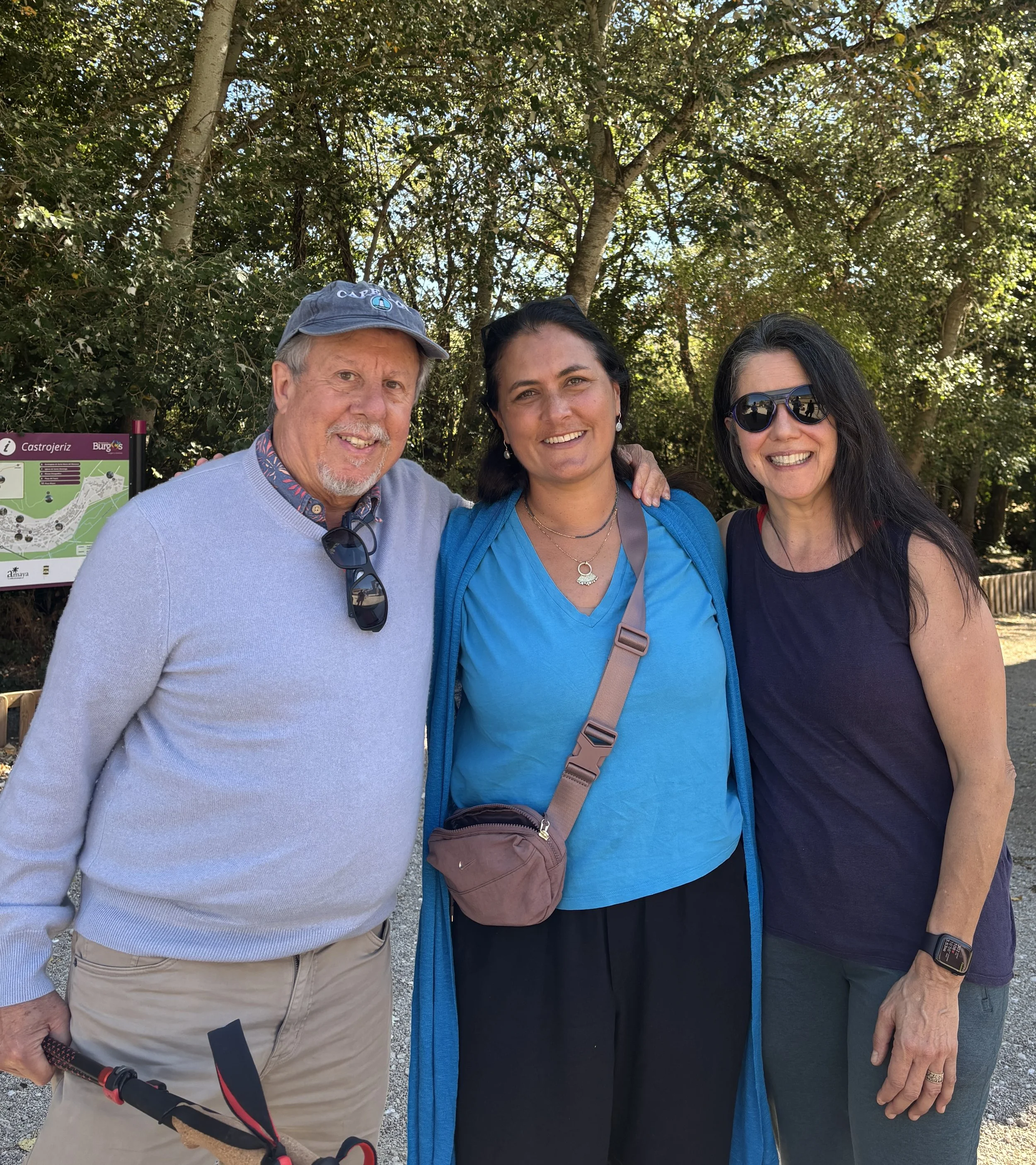
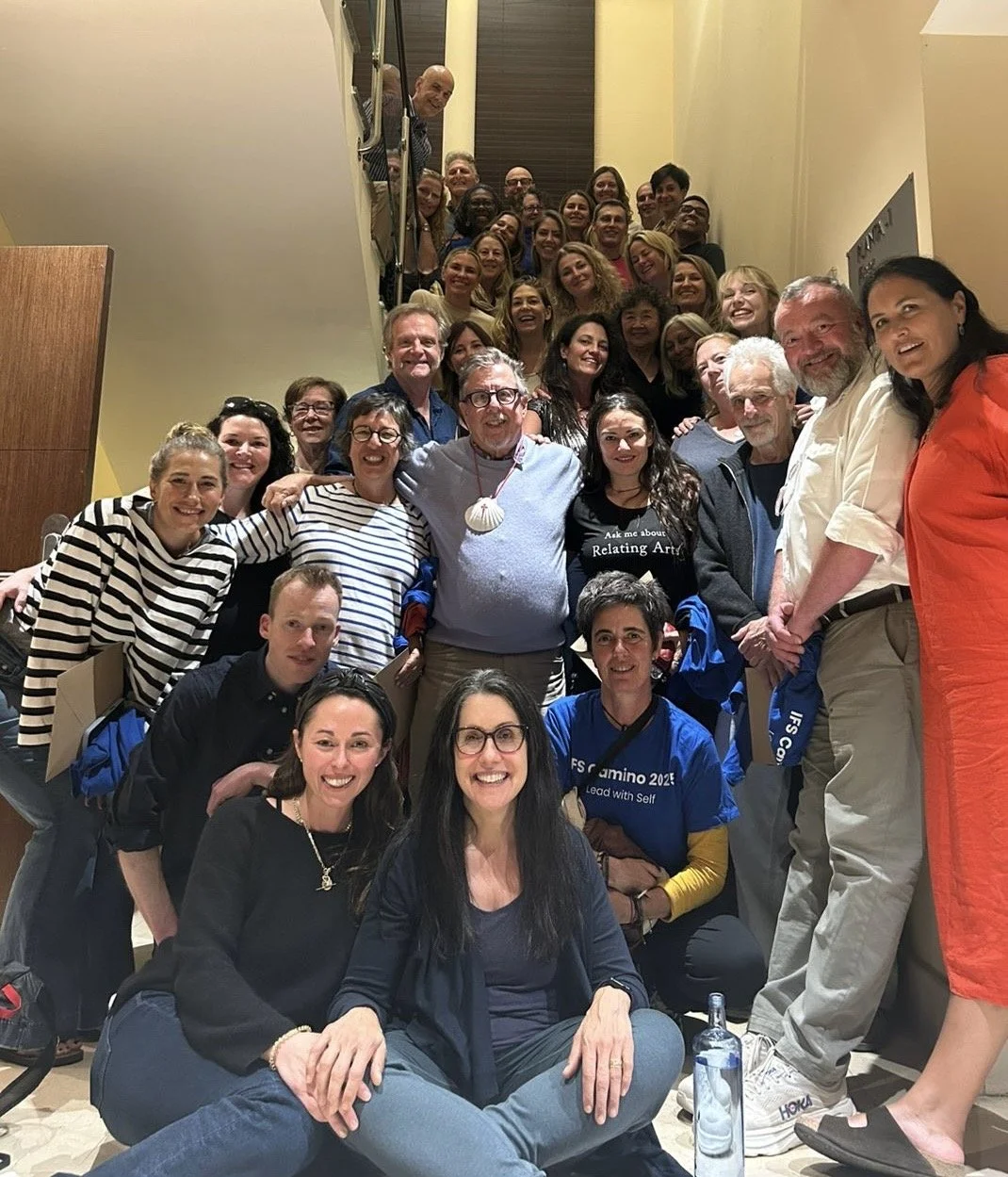
I first saw this clearly while supporting an Internal Family Systems Camino de Santiago retreat led by Richard Schwartz and Jeanne Catanzaro in October 2025.
My role was to hold the practical container of the journey, while also being present to what was unfolding within the group as they walked. What became apparent was that something changed when the work was no longer contained within sessions, but began to move through the rhythm of the Camino itself.
Each morning began with meditation and IFS sessions. Participants would leave with questions or reflections stirred during the work, and then set off walking. Hour after hour, the body settled into rhythm. The mind softened. Parts that had been activated began to relax, and something more spacious began to lead.
By the end of each day, people were different…dusty, tired, but softened. There was an openness I’ve rarely seen in more structured environments. Some arrived quietly, full from hours of being with themselves. Others came in deep conversation, unfolding naturally along the path.
What this has become
This experience led to a collaboration with Imma Lloret at the IFS Institute Spain.
Together, we are offering Opening to Self on the Camino, a retreat for experienced practitioners who want to explore the work in this way.
The structure is intentionally light. Rather than following a fixed curriculum, we work with what emerges within the group and within each individual, allowing the process to be shaped by both the work and the journey itself.
The Camino does not replace the IFS work. It changes the conditions in which it unfolds. In that shift, something begins to move that cannot be reached through method alone.
For more information and to book: https://institutoifs.com/en/formacion/opening-to-self-on-the-camino
How I work
I work in partnership with practitioners, teachers, and organisations who are interested in bringing their work into the context of pilgrimage.
This is not about translating existing material into a different setting, but about allowing the work to be lived through the structure of the journey, the rhythm of the days, and the shared experience of walking.
I design and hold the conditions in which this can unfold. This includes the practical architecture of the journey as well as the more subtle elements that support depth, trust, and self-led change.
Each collaboration is shaped in response to the work itself, the people involved, and the particular landscape we are walking through.
The pilgrim paths
I work across a small number of pilgrimage routes, each with its own rhythm, history, and quality of experience.
Camino de Santiago, Spain
A well-worn path held by centuries of pilgrimage. Long days of walking through open landscapes, where rhythm takes over and the simplicity of the journey allows things to fall away.
The Franciscan paths to Assisi, Italy
Walking through the Umbrian hills toward Assisi, following routes associated with St. Francis. A quieter, more intimate journey, where the landscape invites reflection and a different kind of pace.
Kumano Kodo, Japan
Mountain paths through forest and shrine, where the journey feels both physical and devotional. The terrain and tradition create a depth that is less spoken, but strongly felt.
Each path is not a backdrop. It is part of the work.
If you feel drawn explore how your work could be enhanced by pilgrimage, you are welcome to book book a free 30-minute exploratory call